Best Peptides Website Searches: What Buyers Expect Before They Trust a Brand
Written by Peptide Growth Agency · Editorial standards
TL;DR
Best peptides website searches reveal what buyers expect before trusting a brand: COAs, transparency, education, UX, and speed that convert skeptical visitors.
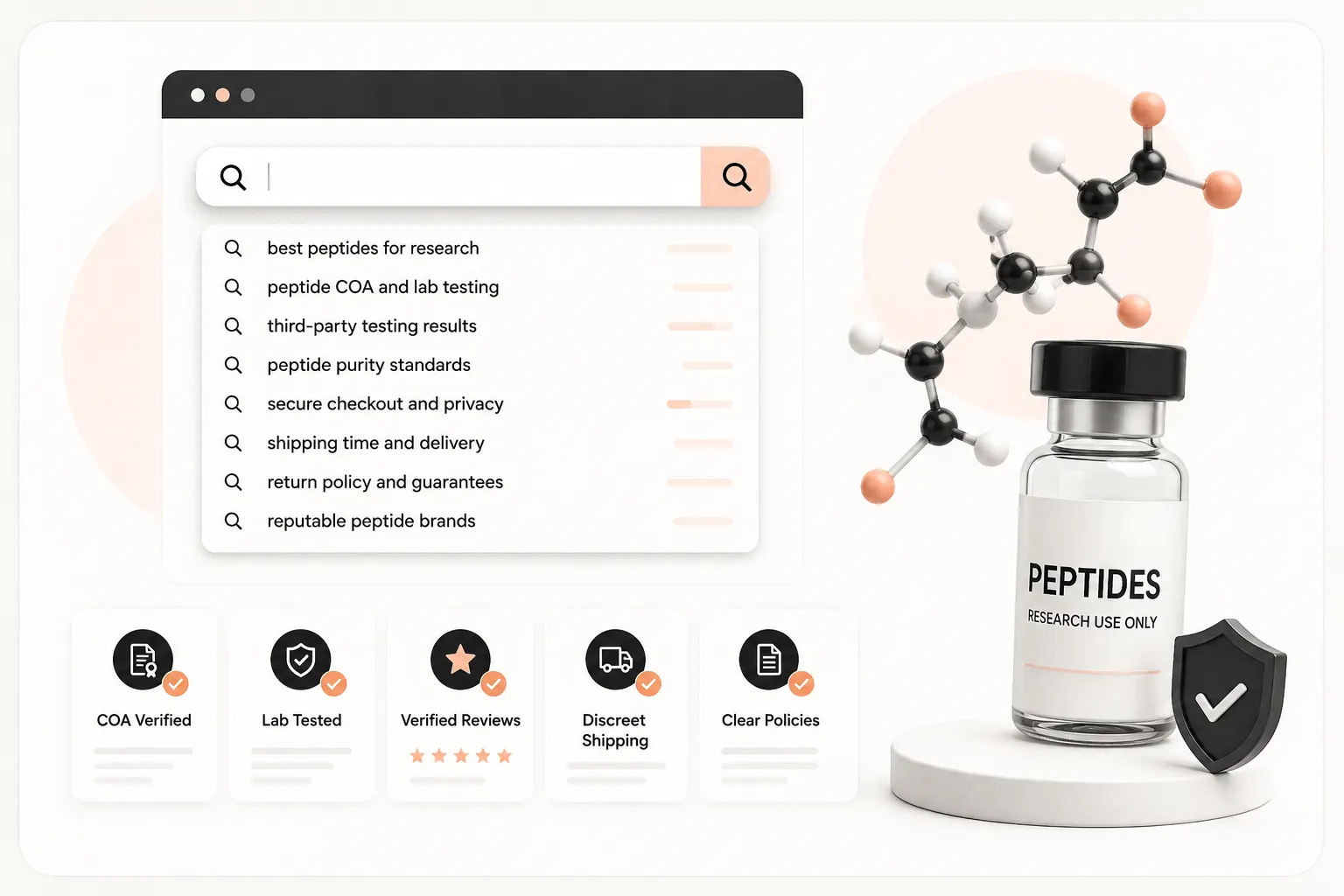
When someone searches "best peptides website," they are not just looking for products. They are looking for a brand they can trust enough to buy from. The pages that win these searches earn the click with a strong result, then earn the trust with verifiable quality information, transparency, careful education, and a fast, clean experience. This is how skeptical buyers decide.
A quick framing note: Peptide Growth Agency helps brands market and rank. We do not sell peptides. "Best peptides website" is a high-intent search your brand competes for, and our work is making your site the answer that earns both the click and the confidence behind it.
Skeptical by default
Peptide and research-focused buyers tend to be informed and cautious. They have seen vague claims and inconsistent quality, so they arrive looking for reasons to disqualify a brand before they look for reasons to buy.
That changes the job of the website. It is not enough to look premium. The site has to remove doubt faster than the next tab the buyer has open.
The trust signals that actually move buyers
Across this niche, a consistent set of signals separates the brands buyers trust from the ones they bounce from.
Verifiable quality information
Certificates of analysis, where applicable, are among the strongest trust signals available. Buyers want to see that quality is documented, current, and easy to find, not buried or implied. Make verification effortless.
Transparent sourcing and identity
Buyers want to know who is behind the brand and how products are sourced and handled. Clear organizational identity, sourcing detail, and accessible contact information all reduce perceived risk.
Honest, specific education
Careful educational content signals expertise and respect for the buyer. Explain clearly, cite credible references, and avoid outcome claims. Restraint reads as confidence; hype reads as a warning.
UX and speed are trust signals too
Buyers read site quality as brand quality. A slow, cluttered, or unstable page tells a skeptical visitor that the brand may be careless elsewhere too.
- Speed and stability. Fast load, no layout shift, responsive interaction. Compress images and serve modern formats.
- Clean navigation. Buyers should find quality information, product details, and contact paths without hunting.
- Mobile-first design. Most of these searches happen on phones; the mobile experience is the experience.
- Low-friction paths. Reduce steps between interest and action, and make the next step obvious.
The technical and ranking side of this overlaps with what we cover in what makes the best peptide website rank in 2026. A complete build checklist lives in our peptides website checklist.
Earning the click before earning the trust
Trust starts in the search result. The title and description a buyer sees set the expectation. Promise clarity and credibility, then deliver it above the fold.
On the landing page, the first screen should:
- Mirror the buyer's intent so they know they are in the right place.
- Surface a trust signal immediately, such as quality documentation or transparent sourcing.
- State value plainly, without exaggerated claims.
- Make the next step clear and easy.
Matching the result to the page is also an SEO discipline. We break down intent matching in peptide website SEO: how brands compete for buyer-intent searches.
Social proof and reputation buyers can verify
Skeptical buyers do not take a brand's word for it. They look for corroboration outside the brand's own marketing. The best peptides websites make this easy by surfacing reputation signals buyers can verify.
- Authentic reviews and testimonials that read as real, specific, and recent rather than generic.
- Third-party references to recognized standards or independent sources where appropriate.
- A visible, consistent identity across the website and any public profiles.
- Responsive support channels that signal a real team stands behind the brand.
The goal is not to overwhelm the buyer with badges. It is to give a cautious person enough verifiable evidence to move from doubt to confidence. A single credible, checkable signal almost always outweighs a wall of generic claims.
The first thirty seconds
Most trust decisions happen fast. Within the first half-minute, a skeptical buyer is forming a judgment about whether the brand is credible enough to keep reading.
In that window, the page should answer three silent questions: Am I in the right place? Can I trust this brand? What do I do next? If the headline mirrors intent, a real trust signal is visible immediately, and the next step is obvious, the buyer stays. If any of the three is missing, they leave before the rest of the page ever gets a chance.
This is why trust cannot be saved for a deep product page or an about section the buyer never reaches. It has to be present where attention is highest, on the first screen of the page that ranked.
Where brands lose trust
The common failures are predictable and fixable:
- Outcome claims that overreach and trigger skepticism or platform action.
- Quality information that is hard to find or out of date.
- Slow, heavy pages that feel low-effort.
- Generic copy that could describe any brand.
- No clear human or organizational identity behind the site.
Each of these adds friction at the exact moment a skeptical buyer is deciding. Removing them is usually higher-leverage than adding more traffic. A brand that fixes its trust gaps often sees conversions rise without any change in visitor numbers, because the same traffic finally has a reason to stay.
It is worth auditing your own site as a skeptic would. Open it on a phone, arrive cold from a search result, and ask at each step whether you would trust this brand with a purchase. The moments where you hesitate are exactly the moments your buyers hesitate, and they point directly to what to fix first.
Compliance is part of trust
In this niche, careful compliance is not a constraint on trust. It builds it. Buyers and platforms both reward brands that educate responsibly and avoid guaranteed-outcome language. Durable trust comes from transparency and restraint, not bold promises.
This is why we treat "best peptides website" as a search to compete for compliantly, never as a claim that anyone sells a guaranteed result. For the broader picture of building authority safely in a trust-sensitive niche, see SEO for peptide brands in a YMYL niche.
Build trust into the site, not on top of it
Trust signals work best when they are designed into the structure, not bolted on later. That means planning quality information, education, sourcing transparency, and conversion paths as part of the build.
Our peptide website design service sequences these trust elements from the start, and our peptide marketing agency work connects them to SEO, email, and paid channels so the trust you build on-site carries through every touchpoint.
Consistency across channels matters as much as the on-site experience. A buyer who reaches your site from a search result, an ad, and an email should encounter the same level of transparency and the same restrained, credible voice each time. When the trust signals are coherent everywhere, each touchpoint reinforces the last, and a skeptical buyer's confidence builds instead of resetting. When they conflict, even a strong website struggles to overcome the doubt created elsewhere.
Bottom line
Buyers searching "best peptides website" are deciding who to trust. The brands that win make quality verifiable, sourcing transparent, education honest, and the experience fast and clean, all without overclaiming. Earn the click in the search result, then earn the trust in the first screen.
If you want to know which trust gaps are costing your brand conversions, request a strategy audit and we will show you what skeptical buyers see and what to fix first.